

Seabird’s Fixed Income Strategies Awarded Seven Top Gun Awards
San Diego, CA – August 25, 2026 – Seabird Investment Partners is pleased to announce that the PSN Manager Database has awarded 7 Top Guns performance distinctions for the period ending June 30, 2026, across our Performing Credit and MuniPlus strategies. The PSN Top Guns award has been a hallmark of excellence in the managed account industry for more than 20 years.
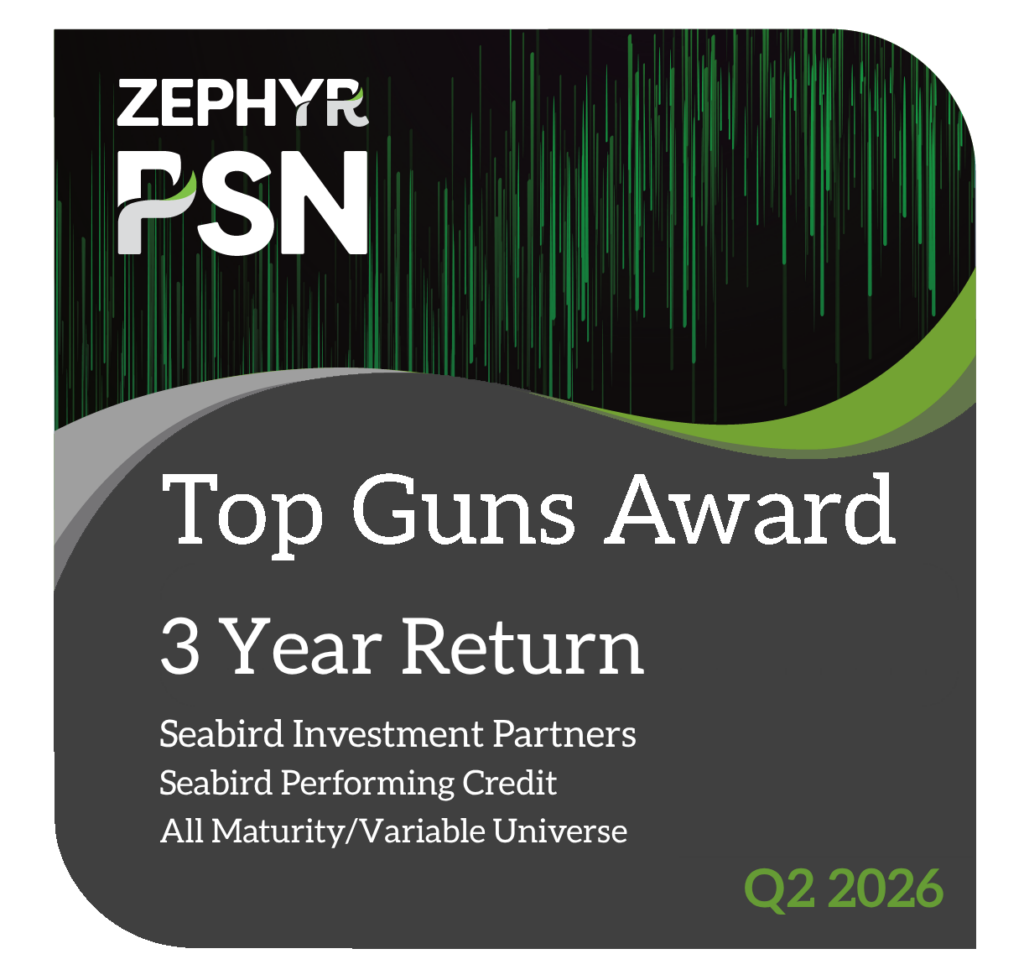
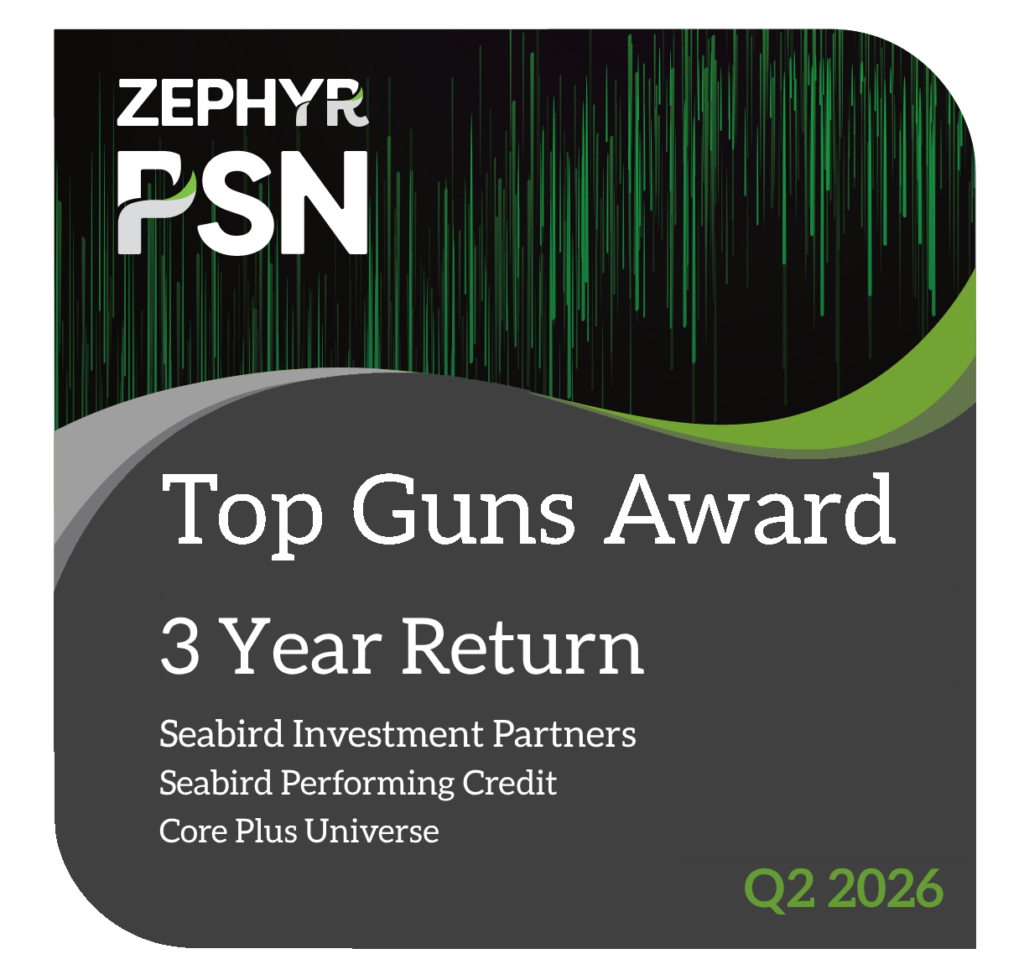
The Performing Credit strategy earned 6 total Top Gun awards in the Core Plus and All
Maturity/Variable Universes, placing #1 for the one year and three-year periods in Core Plus and #2 for the three-year period in All Maturity/Variable. “We are incredibly proud of this recognition,” said Arch Peregoff (Founder & CIO). “Achieving Top Gun status demonstrates that an income focused approach can generate reliable total return, while maintaining a risk profile consistent with an investment grade bond portfolio.”
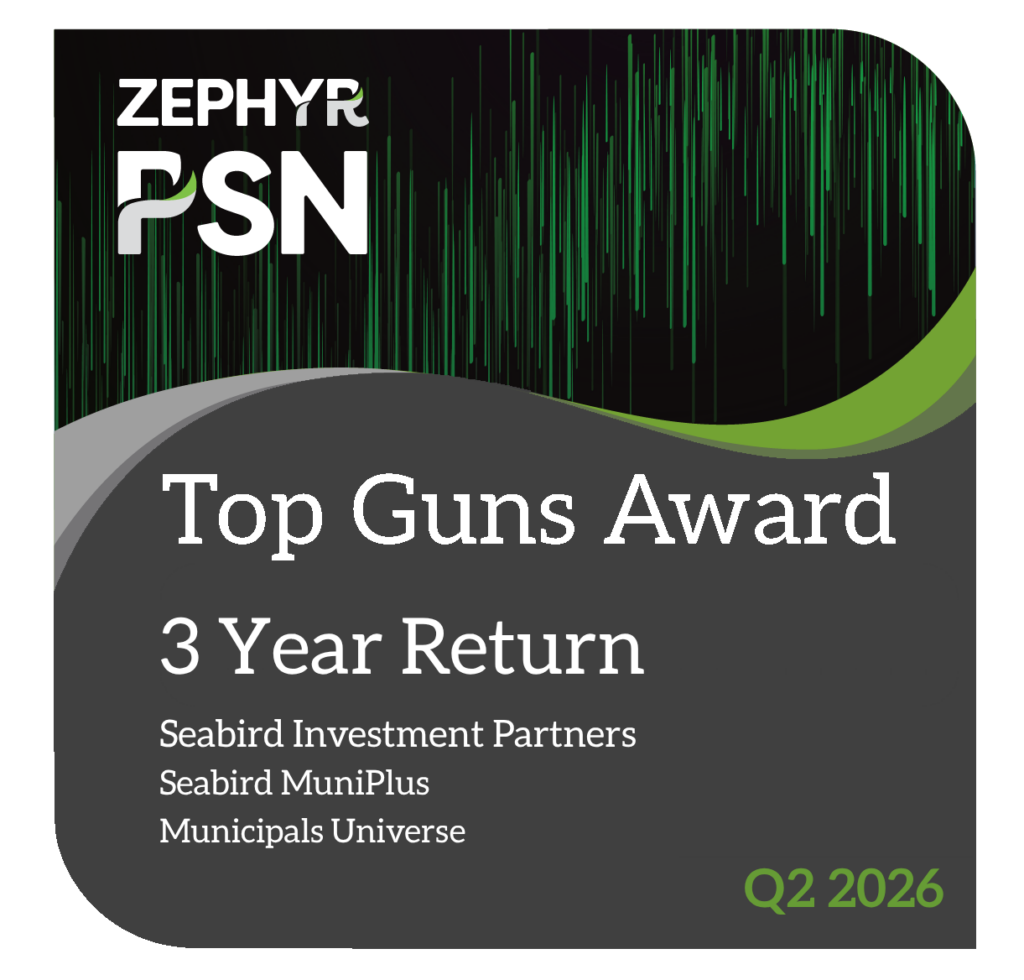
The MuniPlus strategy earned a Top Gun award in the Municipals Universe for the three-year period, placing 10th out of 210 strategies. MuniPlus Portfolio Manager and Partner Stefan Haberer commented “We’re glad to receive this recognition from PSN. The strategy delivered 6.2% annualized net performance over a 3-year period, driven by healthy income generation.”
Review Seabirds PSN Top Gun Awards here:
https://psn.fi.informais.com/PSNTopGuns/topguns_firm_zephyr.asp?iv=EEQHQIJUV
Disclosure: PSN Top Guns rankings are produced by PSN/Zephyr (Informa Financial Intelligence) using manager-submitted data from the PSN database. PSN requires managers included in Top Guns rankings to claim compliance with the GIPS standards; the rankings are generally calculated using gross-of-fee returns. The rankings referenced here are based on the one-quarter, one-year, and three-year periods ended June 30, 2026. Seabird Investment Partners paid no compensation to be considered for or to receive the rankings. Seabird did pay a licensing fee to use official PSN Top Gun badges. These rankings reflect past performance only, are not indicative of future results, and should not be relied on as the sole basis for any investment decision. Past performance is no guarantee of future results.
About PSN: The PSN Top Guns award has been a hallmark of excellence in the managed account industry for more than 20 years. Selections incorporate some of the most stringent quantitative screens used by any broad industry ranking, taking into account a manager’s correlation to its style benchmark, performance relative to the benchmark, and risk relative to its peer group. The PSN database, maintained by Zephyr (a division of Informa), is North America’s longest running and most comprehensive database of separately managed account (SMA) strategies. With nearly 40 years of detailed performance history covering more than 2,800 firms and 21,000+ products, PSN is widely recognized as the industry standard for SMA evaluation. All firms considered for Top Guns must claim GIPS compliance.
About Seabird Investment Partners: Seabird Investment Partners is a leading investment boutique specializing in value oriented fixed income and equity investments. Seabird Investment Partners works alongside financial professionals, families, and other entrepreneurial investors seeking above average rates of return.
Contact: Marcus O’Leary – Director of Business Development
858-314-6755 | marcus@seabirdfin.com | https://seabirdfin.com/
Click here to download the full press release.

